


Puppies aren't born with good behaviour built-in
Your new puppy didn't come with good behaviour included. Granted, his breeder may have introduced him to some initial toilet training, but the way he behaves as your pet is entirely up to you. The good news is puppies are quick to learn, so the sooner you start training him, the better. And if you follow some basic rules, you're in for a rewarding relationship with your pet for years to come.
Always reward good behaviour
Whenever your puppy does something good naturally, make sure you reward him. Although dogs of any age react positively to rewards of praise or food or both, when a puppy is rewarded, it will ensure that in t,he future, he'll be "good" again. But timing is of the essence; that reward must be given within a few seconds, or your puppy might link it to another type of behaviour rather than the one you intended.


Tasty Tips
Bad behaviour: do you prevent it or ignore it?
Actually, the answer is both.
Take chewing, for example. It's something you should expect your puppy to indulge in, as part of the exploration of his surroundings and the discovery of new things. The reasons for chewing may vary, but they range from boredom and teething, to attention seeking and the stress felt at being left alone.
Favorite objects to chew include pillows, shoes and items of furniture such as chair legs, so it's important that you teach your puppy what he can and cannot chew. After all, he wasn't born with a 'mustn't chew the kids' slippers" gene.
As well as denying him access to areas where he might do damage in the early weeks, you should also give him his own chew toys. When he chews one of these, lavish praise on him and let him get on with his chewing.
And when he chews the wrong things? Ignore it. That's right, ignore the 'bad' behaviour; no shouting, no smacking, no angry face. Just pretend your puppy isn't there and he'll soon get the message.
Sometimes you have to ignore the "ignore" rule
Of course, there may be occasions when ignoring your puppy's bad behaviour can be downright dangerous. For example, you might catch him trying to chew through a live electric cable. He doesn't know it's wrong or dangerous, but you must step in and say "No". You don't have to shout or have a prolonged go at him; a short, sharp "no" should be enough to get his attention. When he stops and you've got his attention, praise him and reward him with a treat.
Don't let barking drive you mad
Did you know that, as puppies reach maturity at around 6 or 7 months, they begin to guard naturally? Well, they do, and owners who don't know this and encourage their pets to bark end up with a dog that'll bark at every opportunity, and you won't be able to control it later.
So if you want a quiet contented life with your dog later, ,don't encourage your puppy to bark. That's not to say he'll ignore any serious threats; he'll react naturally, without being taught.
And please, don't encourage or reward excitable barking. He may bark with excitement when he's about to go out for a walk, so stand still and ignore him. When he's quiet, continue with your walk preparation.

Related products

Adult Light Large Breed Chicken Meal & Barley Recipe Dog Food
Fewer calories for less active large breed dogs
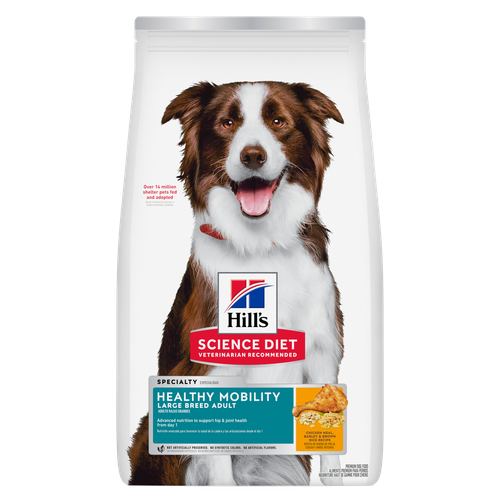
Hill's Science Diet Adult Healthy Mobility Large Breed Chicken Meal, Barley & Brown Rice Recipe Dog Food
Advanced nutrition shown to support joint health and improve mobility

Adult Large Breed Chicken & Barley Recipe Dog Food
Supports healthy joints, lean muscle, and beautiful coat for large breed dogs

Adult Light Chicken Meal & Barley Recipe Dog Food
Fewer calories for less active dogs
Related articles

Helpful Tips for Exercising with Your Dog
Though it may seem like your four-legged friend loves nothing more than to nap on the couch, dogs need regular exercise to stay healthy just like people do.
Exercise Tips to Keep Your Dog Active
A little exercise can make a big difference. Not only will it enhance your pet’s health, but it will beef up your relationship as well.

What to Look For in Food for a Mature Dog
Learn about choosing the right dog food to help ensure your mature older dog will receive the correct balance of nutrition.

Keeping Your Dog From Begging at the Dinner Table
Learn how to stop your dog from begging at the dinner table, and understand how it can help contribute to his health.

Put your dog on a diet without them knowing
Our low calorie formula helps you control your dog's weight. It's packed with high-quality protein for building lean muscles, and made with purposeful ingredients for a flavorful, nutritious meal. Clinically proven antioxidants, Vitamin C+E, help promote a healthy immune system.
Put your dog on a diet without them knowing
Our low calorie formula helps you control your dog's weight. It's packed with high-quality protein for building lean muscles, and made with purposeful ingredients for a flavorful, nutritious meal. Clinically proven antioxidants, Vitamin C+E, help promote a healthy immune system.