


Feelings of fear and anxiety can affect our cats much like they affect us. Stress can occur in your cat for multiple reasons. Perhaps you’ve recently moved or brought a new pet or family member home. Whatever the case may be, if you have a stressed cat, there could be an underlying problem. One of the first ways to detect this problem is when your cat stops using her litter box. She may be peeing in a new spot, spraying on a wall, or having trouble urinating.

Unfortunately, inappropriate urination is one of the most common reasons why cats are left at shelters or put outdoors. If your cat starts marking her territory away from her litter box, it’s not out of revenge or spite; it’s probably because something is wrong. While it could be a behavioral problem, or she doesn’t like her litter box for some reason, a medical condition should first be ruled out. One of the most frequent medical causes of a urination problem is feline lower urinary tract disease.
What is FLUTD?
Feline lower urinary tract disease, or FLUTD, is a term used to describe a group of disorders or diseases that affects a cat’s lower urinary tract (bladder or urethra). FLUTD is diagnosed after causes like urinary tract infection (UTI) or kidney stones have been ruled out. Causes include crystals or stones in the bladder, bladder infections, urethral obstruction, inflammation in the urinary bladder (sometimes referred to as interstitial or idiopathic cystitis), and other abnormalities in the urinary tract. FLUTD is one of the most common reasons cats are taken to the vet.


Tasty Tips
Warning Signs of Feline Urinary Tract Infections
- Straining to urinate: Feline idiopathic cystitis can lead to straining while urinating, and can eventually lead to more severe situations such as the formation of bladder stones or a urethral plug. Male cats are more at risk to develop a urethral plug; this is a life-threatening condition that causes a cat to lose the ability to urinate.
- Frequent attempts to urinate: Cats with FLUTD have a frequent urge to urinate, but can only pass a small amount each time.
- Painful urination: If your cat cries out while urinating, this is a tell-tale sign that she may be in pain.
- Blood in urine
- Licking the genital or abdominal areas: This is a way for cats to soothe the pain of a urinary tract disease.
- Irritability
- Urinating Outside the Litter Box: Take note if your cat is urinating in places other than litter box, especially on cool surfaces like tile or a bathtub.
What to Do if You Suspect a FLUTD
If your cat is having trouble urinating and displaying other signs of FLUTD, take her to the vet as soon as possible. Your vet will give her a physical exam and collect urine samples. Blood work, x-rays, and abdominal ultrasound may also be recommended for diagnosis.
Most cases of FLUTD improve without medical treatment, but the symptoms can recur. Though they may not be life-threatening to your cat, they can be uncomfortable, so treatment can improve her overall quality of life. While treatment of FLUTD depends on the underlying cause, it is always beneficial to increase your cat’s water intake. Maintaining a healthy weight, feeding her canned food and encouraging her to use her litter box can also help. However, certain conditions simply cannot be treated at home. Bacterial cystitis should be treated with antibiotics, while stones must be surgically removed.
It’s always best to be safe. A simple phone call to your vet when you first notice any of the above symptoms can help diagnose a problem much sooner and save your cat a longer period of discomfort. It’s also important to monitor your cat after being diagnosed with FLUTD during treatment to ensure that the problem doesn’t reoccur as cats are good at hiding their pain.
Preventing Future UTIs in Your Cat
Following your vet visit, you can make other changes to your cat’s life to decrease the likelihood for FLUTD to come back. Environmental recurrence has shown to reduce the recurrence rate by 80 percent, and can also help your cat use her litter box. This includes spending more time with your cat, giving her access to windows, and giving her more toys. You can also increase the number of litter boxes in your home and make sure they’re properly cleaned.

Related products

Adult Perfect Digestion Chicken, Barley & Whole Oats Recipe Cat Food
Hill's Science Diet's breakthrough nutrition supports ultimate digestive well-being & healthy microbiome

Adult Healthy Cuisine Roasted Chicken & Rice Medley Cat Food
Delicious roasted chicken and rice in a mouthwatering sauce

Kitten Healthy Cuisine Tender Chicken & Rice Medley
Delicious tender chicken and rice in a mouthwatering sauce with precisely balanced nutrition to support 5 essential building blocks for lifelong health
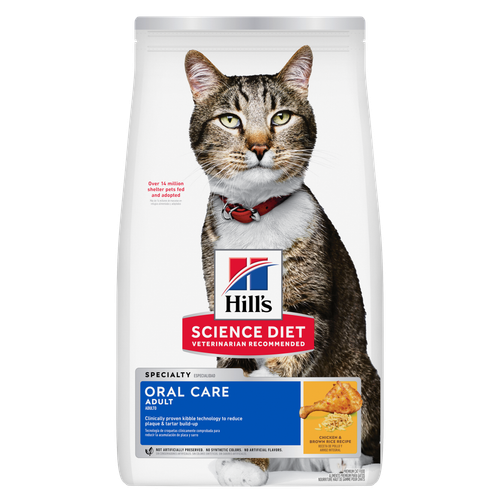
Adult Oral Care Chicken & Brown Rice Recipe Cat Food
Clinically proven kibble technology to reduce plaque & tartar build-up
Related articles
Weight Management
Obesity affects more than 30 percent of cats in America. Learn how you can properly feed and exercise your cat to improve its weight management.
Cats with Sensitive Skin: Looking Beneath the Fur
Provide the best possible treatment for cats with sensitive skin by spotting the signs, knowing the causes, and understanding the remedies. Learn more now.
Belly Upset: Soothing Your Cat's Sensitive Stomach
Understand the symptoms of a chronic upset stomach in your cat, and learn how to help sooth their discomfort.

Brushing & Food: Keys to Maintaining Your Cat's Oral Health
Get helpful information on proper feline oral healthcare and why it's so vital to take care of your cat's teeth.

Put your cat on a diet without them knowing
Our low calorie formula helps you control your cat's weight. It's packed with high-quality protein for building lean muscles, and made with purposeful ingredients for a flavorful, nutritious meal. Clinically proven antioxidants, Vitamin C+E, help promote a healthy immune system.
Put your cat on a diet without them knowing
Our low calorie formula helps you control your cat's weight. It's packed with high-quality protein for building lean muscles, and made with purposeful ingredients for a flavorful, nutritious meal. Clinically proven antioxidants, Vitamin C+E, help promote a healthy immune system.