


If you aren't planning to breed your cat it's always best to have her spayed. Pregnancy in cats is a significant event, and if you have made the big decision to allow your cat to have kittens, you're in for quite an adventure.
A mother cat is usually more than capable of taking care of a birth on her own and it's normally best to leave her to it. However, there are a few things you can do to help make things easier.
Tell-tale signs
There are a number of signs that indicate your cat is pregnant. The first indicator may be that her heat cycle will stop. Another early sign is that your cat's nipples will swell and take on a darker, red colour. A pregnant cat will also eat more and possibly have bouts of 'morning sickness'. After five weeks, swelling of your cat's stomach will be noticeable and it will continue to swell until she gives birth.
You may see a dramatic change in behaviour. She might suddenly become particularly affectionate and eager to spend time around you. Conversely, you may also find your previously friendly cat becomes sullen and reclusive. Don't be concerned, both of these behaviours are entirely normal.
Cats usually manage birth with little difficulty. If you are concerned about your cat or want to confirm that she is pregnant, take her to your vet. They'll check to make sure your expecting mother is healthy and confirm the pregnancy with a physical check or an ultrasound.
Preparation
In the months leading up to the birth there's not a lot you need to do for your expecting mother, just make sure she continues to receive a good, healthy diet and lots of water.
As soon as pregnancy is confirmed you should switch her to a premium kitten food such as Hills Science Plan Kitten to provide extra nutrients for her and her kittens. Keep her on this food until the kittens are weaned. Don't be surprised if your mother-cat doesn't seem to eat a lot right away. She's has an abdomen full of kittens and will probably prefer to eat several times a day in small portions.
As the birth date approaches your cat will probably start looking for a quiet, soft place to nest in. Provide something like a towel-lined box for your cat and encourage her to use it. Don't be concerned however, if in the end, she chooses not to use it.


Tasty Tips
An imminent birth is usually marked by a milky discharge from your cat's nipples. If you're monitoring your cat's temperature, it will usually drop to below 38.9 degrees C just before delivery.
Once delivery begins your cat may start purring heavily and you will be able to see the contractions. Remember that in most cases a cat is entirely capable of getting through a delivery on her own.
Slowly does it
The average litter size is between 2 to 5 kittens. Usually a cat will pause for anywhere between 10 minutes to an hour between kittens. If you know she still has kittens inside her and has taken more than three hours to deliver the earlier ones, you should get her to the vet.
When the kittens are first delivered they should already be tearing out of the amniotic membrane or sac. Usually the mother will help them with this task, if she doesn't, you need to very carefully cut it open to release the kitten.
A mother cat will lick her kittens once they're delivered to stimulate their breathing. If she's too exhausted to do this, or is distracted by another birth, it may be up to you. Rub the kitten gently with a towel the same way a mother would lick it. You should tip the kitten so it is face down, this will help clear fluid from it's airway.
Placenta removal
After every kitten a placenta should also emerge. If a placenta is retained it can result in infection in the mother. Count to make sure you have seen a placenta for each kitten. Don't be surprised if the mother eats some or all of the placentas. This is perfectly normal and safe. If the mother, appears to have retained a placenta, again you need to get her to the vet quickly.
The mother cat will also usually chew off the umbilical cord. If she doesn't, you should help. Tie a piece of sturdy thread tightly around the cord about an inch from the kittens' body. Tie another loop of thread an inch further up the cord, then cut between the two loops with a sharp pair of scissors.
Once the kittens have been delivered and cleaned, they should immediately crawl to their mother's nipples and begin to suckle. At that point it's safe to let your cat and her kittens have some quite time. Congratulations on your new litter of kittens.

Related products

Kitten Healthy Cuisine Tender Chicken & Rice Medley
Delicious tender chicken and rice in a mouthwatering sauce with precisely balanced nutrition to support 5 essential building blocks for lifelong health
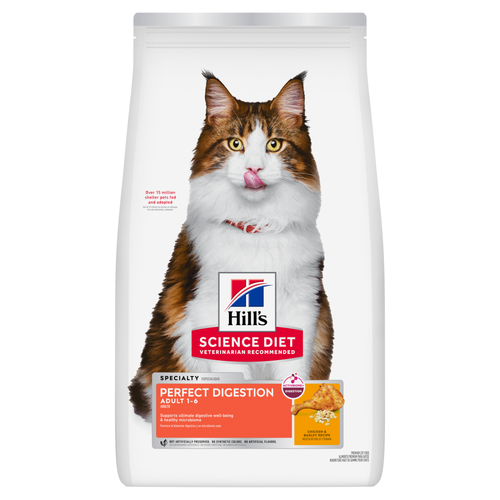
Perfect Digestion Adult Chicken & Barley Recipe Dry Cat Food
Hill's Science Diet's breakthrough nutrition supports ultimate digestive well-being & healthy microbiome

Adult Healthy Cuisine Roasted Chicken & Rice Medley Cat Food
Delicious roasted chicken and rice in a mouthwatering sauce
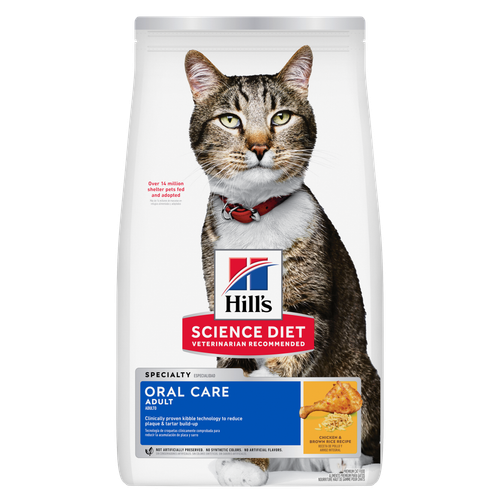
Adult Oral Care Chicken & Brown Rice Recipe Cat Food
Clinically proven kibble technology to reduce plaque & tartar build-up
Related articles
Cats with Sensitive Skin: Looking Beneath the Fur
Provide the best possible treatment for cats with sensitive skin by spotting the signs, knowing the causes, and understanding the remedies. Learn more now.
Weight Management
Obesity affects more than 30 percent of cats in America. Learn how you can properly feed and exercise your cat to improve its weight management.

Brushing & Food: Keys to Maintaining Your Cat's Oral Health
Get helpful information on proper feline oral healthcare and why it's so vital to take care of your cat's teeth.
Belly Upset: Soothing Your Cat's Sensitive Stomach
Understand the symptoms of a chronic upset stomach in your cat, and learn how to help sooth their discomfort.

Put your cat on a diet without them knowing
Our low calorie formula helps you control your cat's weight. It's packed with high-quality protein for building lean muscles, and made with purposeful ingredients for a flavorful, nutritious meal. Clinically proven antioxidants, Vitamin C+E, help promote a healthy immune system.
Put your cat on a diet without them knowing
Our low calorie formula helps you control your cat's weight. It's packed with high-quality protein for building lean muscles, and made with purposeful ingredients for a flavorful, nutritious meal. Clinically proven antioxidants, Vitamin C+E, help promote a healthy immune system.