


If you've noticed your cat has been scratching more than normal, you probably should consider that she could be hosting tiny parasites known as cat fleas.
How did your cat become infested? Now that she has them, how do you get rid of them? Read on for the answer to those questions and more about cat fleas.
How Did My Cat Get Fleas?
One study detailed in Veterinary Parasitology found a flea that could jump 19 inches in one hop, or 160 times its body length. These jumping skills help these nonflying parasites travel easily from the ground to a new host or from host to host. Animals commonly found in your backyard — such as raccoons, mice, possums and others — more than likely carry fleas and can leave behind fleas or larvae in your yard that can easily enter your home by hitchhiking on you or a dog coming in from outdoors. Fleas can easily jump from pet to pet, no matter the species. Your cat could even simply have attracted a flea by sitting peacefully in front of her favorite screened window.

Creepy Crawly Clues
Just one flea can turn into a major infestation in a short time, as a single female can lay up to fifty eggs a day, according to the University of Kentucky. The most obvious sign of a flea infestation is a cat obsessively scratching herself. Cornell University College of Veterinary Medicine writes that fleas most frequently bite cats on the back of the neck and the top of the tail head. Since they can't reach these places with their tongue while grooming, it means they have to scratch.
If you suspect your cat has fleas, run a fine-tooth comb through her coat while she stands on a white piece of paper or a white towel. If she does have fleas, you'll more than likely dislodge tiny black specks (flea feces) and maybe even a flea or two that you'll be able to easily spot on the white background. You can see fleas with the naked eye.


Tasty Tips
What Health Problems Do Fleas Cause?
Cat fleas can be more than an irritant; sometimes they can be the cause of other serious health issues. For instance, writes Cornell, fleas can transmit dog and cat tapeworm, or their bloodsucking can lead to anemia if your cat is still a lightweight kitten.
A cat with fleas can also be a danger to her human family. Cat fleas can act as agents for human diseases like toxoplasmosis.
Treating and Preventing Fleas
Ready to put the "no vacancy" sign out for these tiny freeloaders? Your first course of action is to call your vet to get advice and treatment options. Your vet might also suggest having your cat tested for tapeworm and other diseases.
Not only do you have to treat your cat, you also have to remove all pests from your home to prevent a reinfestation. It will take careful vacuuming, washing and maybe an exterminator to effectively rid your home of all pests.
You can prevent fleas from coming back by using one of the proven flea and tick repellent products on the market, even on indoor cats. Flea and tick products for pets are regulated by either the Food and Drug Administration (FDA) or the Environmental Protection Agency. Products approved by those federal regulators must show that the drug or pesticide they are marketing actually works, and that it meets up-to-date safety standards to protect pets, people and the environment. These products come in a variety of forms such as spot-on applications, pills, or collars. Make sure the repellent you choose is safe for your cat, since a dog-safe product may harm her if she licks it off her fur. It is wise to purchase your flea and tick products from your veterinarian as some over-the-counter and natural products can be ineffective or particularly harmful to certain pets.
The FDA advises treating your pet at the beginning of flea and tick season in your area, but your vet will likely recommend treating them for the entire year. Flea season typically peaks in warmer months, but in some parts of the country can last year-round. You may think you have the cleanest kitty in the world, but fleas can affect any pet. So keep a watchful eye to make sure she's happy, healthy and itch-free.

Related products

Kitten Healthy Cuisine Tender Chicken & Rice Medley
Delicious tender chicken and rice in a mouthwatering sauce with precisely balanced nutrition to support 5 essential building blocks for lifelong health

Adult Perfect Digestion Chicken, Barley & Whole Oats Recipe Cat Food
Hill's Science Diet's breakthrough nutrition supports ultimate digestive well-being & healthy microbiome

Adult Healthy Cuisine Roasted Chicken & Rice Medley Cat Food
Delicious roasted chicken and rice in a mouthwatering sauce
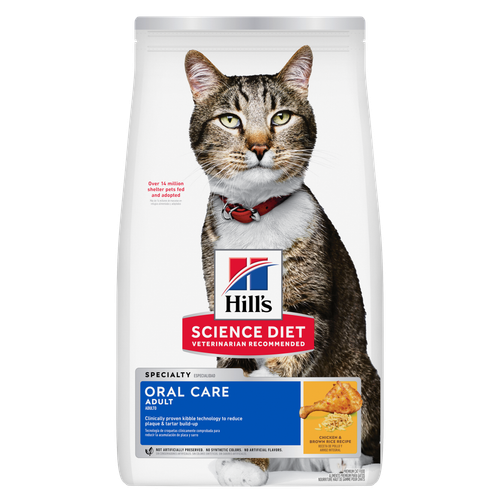
Adult Oral Care Chicken & Brown Rice Recipe Cat Food
Clinically proven kibble technology to reduce plaque & tartar build-up
Related articles

Brushing & Food: Keys to Maintaining Your Cat's Oral Health
Get helpful information on proper feline oral healthcare and why it's so vital to take care of your cat's teeth.

Weight Management
Obesity affects more than 30 percent of cats in America. Learn how you can properly feed and exercise your cat to improve its weight management.

Belly Upset: Soothing Your Cat's Sensitive Stomach
Understand the symptoms of a chronic upset stomach in your cat, and learn how to help sooth their discomfort.

Cats with Sensitive Skin: Looking Beneath the Fur
Provide the best possible treatment for cats with sensitive skin by spotting the signs, knowing the causes, and understanding the remedies. Learn more now.

Put your cat on a diet without them knowing
Our low calorie formula helps you control your cat's weight. It's packed with high-quality protein for building lean muscles, and made with purposeful ingredients for a flavorful, nutritious meal. Clinically proven antioxidants, Vitamin C+E, help promote a healthy immune system.
Put your cat on a diet without them knowing
Our low calorie formula helps you control your cat's weight. It's packed with high-quality protein for building lean muscles, and made with purposeful ingredients for a flavorful, nutritious meal. Clinically proven antioxidants, Vitamin C+E, help promote a healthy immune system.