


When it comes to brushing cat's teeth, it's never too early to start. As her pet parent, routine cat dental healthcare is an important part of maintaining her overall well-being.
You may not think about your furry friend's oral health while you're brushing your own pearly whites, and many think brushing a cat's teeth is just one of the many cat myths out there, but you can't ignore good feline dental hygiene. Here are a few reasons to adopt a dental hygiene routine and tips and tricks to make the process as successful and easy as possible.
Why Is Oral Care Important?
Just like humans, cats are susceptible to gum disease and tooth loss. "Periodontal disease is the most common clinical condition occurring in adult dogs and cats," states the American Veterinary Dental College (AVDC). "By three years of age, most dogs and cats have some evidence of periodontal disease." The good news? It's preventable. In addition to freshening her breath, brushing your cat's teeth is one of the first steps in disease prevention.
Plaque buildup occurs when bacteria sticks to the teeth, which forms tartar (also known as dental calculus). When plaque and tartar get under the gumline, a "cycle of damage" begins to occur, the AVDC explains, which can lead to gum diseases, like gingivitis and periodontitis. Gingivitis is when the gums redden and swell. Periodontitis is more serious and may result in bone and soft tissue loss. The consequences of poor dental care for cats may be loss of teeth and damage to your pet's internal organs.
Signs to look for with possible dental disease or conditions in your cat are loss of appetite, difficulty chewing, loose (or missing) teeth, severe bad breath, redness or bleeding of the gums, and pawing at her mouth. If you suspect your cat already has a dental issue, make an appointment with your veterinarian right away for an exam and possible teeth cleaning. A professional cleaning procedure requires anesthesia, so be prepared, it might require an overnight stay at the vet's office.


Tasty Tips
Choosing a Brush
The proper instruments make all the difference. You can use human toothbrushes. Baby toothbrushes are best because they're designed for small spaces and have extremely soft bristles that won't damage your kitty's gums, which is especially important if she already has mouth irritation. There are special pet toothbrushes, including a fingertip brush with tiny nubs on it. You'll also find cat-approved toothpaste at your vet's office or pet supply store in flavors that appeal to your furry friend. Never use human toothpaste for pets because it contains properties, particularly fluoride, that are harmful to animals (remember, your cat can't spit and rinse once you're done brushing).
Tips for Successful Brushing
Ideally, you want to practice regular cat dental health when your baby is a kitten. No matter her age, start by getting her used to you poking around in her mouth. You can use a piece of gauze, a wet washcloth, or even your finger in the beginning, focusing on the outside of her teeth and the gumline. It can also be a good idea to wrap her in a towel or blanket when you start this process to keep her from squirming and prevent you from getting scratched.
Once she's comfortable, introduce her to the toothbrush and toothpaste by letting her sniff them a bit. Then, in a day or two, start brushing. "Work quickly," suggests Vetstreet. "You don't need to scrub. Work up to 30 seconds of brushing for each side of the mouth at least every other day." If she's resistant, don't give up! Time and patience go a long way.
Cat parents know that it's not easy to brush a cat's teeth — or do anything they don't want you to do, for that matter! But by keeping your cat's teeth clean, you help ensure your cat has good oral hygiene. Good oral care can lead to a healthier cat overall, so you can spend your days playing together, rather than worrying about her teeth.
Food for Oral Care
In conjunction with regular brushing, consider a cat food formulated for oral health, which may slow or even prevent the development of plaque and tartar. There are also some cat treats out there that help with bad breath and cat oral care, but you should give treats only in moderation because of diet, and they are not sufficient at cleaning your cat's whole mouth. Instead, use them as a reward for being good during teeth cleaning time.

Related products

Kitten Healthy Cuisine Tender Chicken & Rice Medley
Delicious tender chicken and rice in a mouthwatering sauce with precisely balanced nutrition to support 5 essential building blocks for lifelong health

Adult Perfect Digestion Chicken, Barley & Whole Oats Recipe Cat Food
Hill's Science Diet's breakthrough nutrition supports ultimate digestive well-being & healthy microbiome
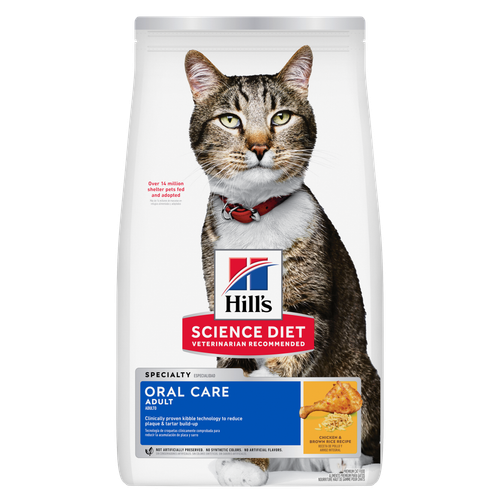
Adult Oral Care Chicken & Brown Rice Recipe Cat Food
Clinically proven kibble technology to reduce plaque & tartar build-up

Adult Healthy Cuisine Roasted Chicken & Rice Medley Cat Food
Delicious roasted chicken and rice in a mouthwatering sauce
Related articles

Brushing & Food: Keys to Maintaining Your Cat's Oral Health
Get helpful information on proper feline oral healthcare and why it's so vital to take care of your cat's teeth.
Belly Upset: Soothing Your Cat's Sensitive Stomach
Understand the symptoms of a chronic upset stomach in your cat, and learn how to help sooth their discomfort.

Weight Management
Obesity affects more than 30 percent of cats in America. Learn how you can properly feed and exercise your cat to improve its weight management.

Cats with Sensitive Skin: Looking Beneath the Fur
Provide the best possible treatment for cats with sensitive skin by spotting the signs, knowing the causes, and understanding the remedies. Learn more now.

Put your cat on a diet without them knowing
Our low calorie formula helps you control your cat's weight. It's packed with high-quality protein for building lean muscles, and made with purposeful ingredients for a flavorful, nutritious meal. Clinically proven antioxidants, Vitamin C+E, help promote a healthy immune system.
Put your cat on a diet without them knowing
Our low calorie formula helps you control your cat's weight. It's packed with high-quality protein for building lean muscles, and made with purposeful ingredients for a flavorful, nutritious meal. Clinically proven antioxidants, Vitamin C+E, help promote a healthy immune system.