


ADULT DOG CARE
Different dogs with different needs
A dog between the ages of 1 and 6 years of age is considered an adult dog. In general, these dogs need nutrition with controlled levels of phosphorus, sodium, protein and energy.
But different dogs have different needs. In order to determine the unique nutritional needs for your adult dog, assess his activity level. Some questions to consider:
Is your dog a hunting, sport or working dog?
Does your dog get an average amount of exercise through daily playing and walks?
Does your dog have a low activity level and tend to gain weight easily?
Proper nutrition can also help with problems such as bad breath, sensitive skin or sensitive stomach issues. Labrador retrievers, golden retrievers, Cairn terriers, cocker spaniels, dachshunds, pugs, Shetland sheepdogs, basset hounds and beagles are prone to obesity, so keep breed tendencies in mind when choosing your dog's food.


Tasty Tips
A common concern for adult dogs is kidney health. Dietary phosphorus, protein and salt excesses may exacerbate the progression of kidney damage that leads to kidney failure and death. Therefore, unbalanced high amounts of phosphorus, protein and salt are all nutritional risk factors. Some commercial pet foods contain excess protein, phosphorus, calcium and salt. These excess nutrients must be excreted through the kidneys and become nutritional risk factors.

Related products

Adult Light Large Breed Chicken Meal & Barley Recipe Dog Food
Fewer calories for less active large breed dogs

Adult Light Chicken Meal & Barley Recipe Dog Food
Fewer calories for less active dogs
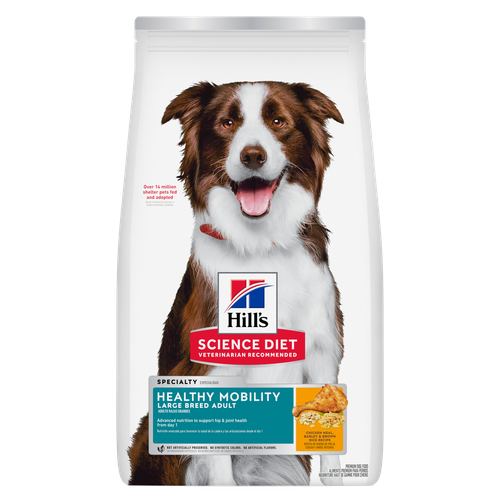
Hill's Science Diet Adult Healthy Mobility Large Breed Chicken Meal, Barley & Brown Rice Recipe Dog Food
Advanced nutrition shown to support joint health and improve mobility

Adult Large Breed Chicken & Barley Recipe Dog Food
Supports healthy joints, lean muscle, and beautiful coat for large breed dogs
Related articles

Exercise Tips to Keep Your Dog Active
A little exercise can make a big difference. Not only will it enhance your pet’s health, but it will beef up your relationship as well.

Keeping Your Dog From Begging at the Dinner Table
Learn how to stop your dog from begging at the dinner table, and understand how it can help contribute to his health.

What to Look For in Food for a Mature Dog
Learn about choosing the right dog food to help ensure your mature older dog will receive the correct balance of nutrition.

Helpful Tips for Exercising with Your Dog
Though it may seem like your four-legged friend loves nothing more than to nap on the couch, dogs need regular exercise to stay healthy just like people do.

Put your dog on a diet without them knowing
Our low calorie formula helps you control your dog's weight. It's packed with high-quality protein for building lean muscles, and made with purposeful ingredients for a flavorful, nutritious meal. Clinically proven antioxidants, Vitamin C+E, help promote a healthy immune system.
Put your dog on a diet without them knowing
Our low calorie formula helps you control your dog's weight. It's packed with high-quality protein for building lean muscles, and made with purposeful ingredients for a flavorful, nutritious meal. Clinically proven antioxidants, Vitamin C+E, help promote a healthy immune system.