


Whether you're going on an extended road trip or for a short drive, car travel with a dog can be a lot of fun. However, traveling with dogs in a car can pose a lot of safety risks. Read on for tips on how to safely transport him and minimize the dangers inherent when riding in the car with your dog.
Crates Are Best
 When traveling with dogs in a car, the American Society for the Prevention of Cruelty to Animals recommends securing dogs of all sizes in travel-rated crates or carriers, both for the dog's safety and to prevent distractions while driving. If possible, crates should be secured in the back seat of a car or the cargo area of an SUV, station wagon, or minivan, and strapped in so that the crate won't slide around during sudden stops. The crate itself should be large enough for your dog to stand up, turn around, sit and lie down comfortably, while not so large that the dog can get tossed around inside the crate while the car moves. It should also provide plenty of ventilation. You can make the crate more comfortable for your dog by lining the floor with blankets, and even go a step further to safeguard against injury by padding the sides with foam. Just be sure your dog won't try to eat or chew any material you use for padding.
When a Crate Won't Work
If a crate is not an option, look for a safety harness that buckles directly into the seat belt buckle, and strap your dog into the back seat. Another commercially available option for safer car travel with dogs is a mesh or metal barrier made to place in minivans, and SUVs to keep your furry guy confined to the back seat. While these options are great for keeping your pup from distracting you or getting underfoot while you're trying to focus on the road, they're not designed to protect him from injury during a crash. Although it might seem like these options provide your buddy with more freedom and make his ride more enjoyable, for his own safety, a crate or carrier is still best.


Tasty Tips
When There Is No Back Seat
While the back of the car is generally safest for your dog, due mainly to potential injury from front-seat airbags, sometimes there isn't a back seat or cargo hold, as is the case with regular truck cabs or two-seater cars. In this case, it's best to secure your dog in a crate or carrier in the passenger seat and turn off the passenger-side airbags. If your dog is too large for a crate to fit in the front seat, use a safety harness to buckle him in. Under no circumstances should he be allowed to ride in the back of an open pickup truck.

On an extended road trip, it can be tempting to drive as far as you can as fast as you can (while still obeying the speed limits of course), but don't forget about your four-legged passenger in your haste to get where you're going. Plan to stop every two hours or so to give your pup a break, let him stretch his legs and do his business. It's also a good idea to bring fresh water and give him a drink whenever you stop. If he's not prone to getting car sick, this is also a good time to feed him a small meal.
Traveling in Comfort
Remember that these guidelines for traveling with dogs in a car are for your dog's safety as much as that of yourself and your other passengers. As such, dogs of any size should be safely restrained. Your tiny dog might be perfectly content to curl up in your lap during the trip, but just as it wouldn't be safe to hold a child in your lap while driving, it's not any safer for your dog. Securing your pup in a crate or restraining device during your trip, regardless of breed or size, will make it much more likely that you two will reach your destination safely.

Related products

Adult Light Large Breed Chicken Meal & Barley Recipe Dog Food
Fewer calories for less active large breed dogs
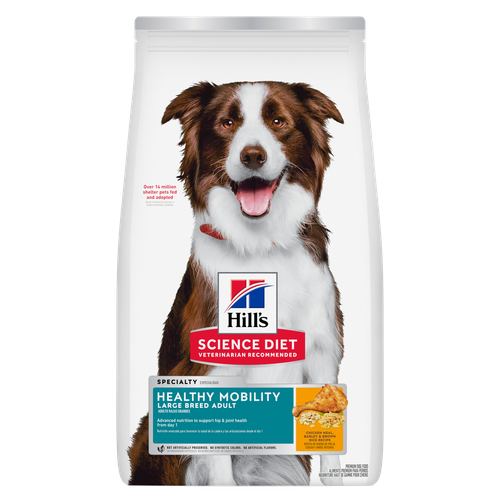
Hill's Science Diet Adult Healthy Mobility Large Breed Chicken Meal, Barley & Brown Rice Recipe Dog Food
Advanced nutrition shown to support joint health and improve mobility

Adult Large Breed Chicken & Barley Recipe Dog Food
Supports healthy joints, lean muscle, and beautiful coat for large breed dogs

Adult Light Chicken Meal & Barley Recipe Dog Food
Fewer calories for less active dogs
Related articles

Keeping Your Dog From Begging at the Dinner Table
Learn how to stop your dog from begging at the dinner table, and understand how it can help contribute to his health.
Helpful Tips for Exercising with Your Dog
Though it may seem like your four-legged friend loves nothing more than to nap on the couch, dogs need regular exercise to stay healthy just like people do.
Exercise Tips to Keep Your Dog Active
A little exercise can make a big difference. Not only will it enhance your pet’s health, but it will beef up your relationship as well.
What to Look For in Food for a Mature Dog
Learn about choosing the right dog food to help ensure your mature older dog will receive the correct balance of nutrition.

Put your dog on a diet without them knowing
Our low calorie formula helps you control your dog's weight. It's packed with high-quality protein for building lean muscles, and made with purposeful ingredients for a flavorful, nutritious meal. Clinically proven antioxidants, Vitamin C+E, help promote a healthy immune system.
Put your dog on a diet without them knowing
Our low calorie formula helps you control your dog's weight. It's packed with high-quality protein for building lean muscles, and made with purposeful ingredients for a flavorful, nutritious meal. Clinically proven antioxidants, Vitamin C+E, help promote a healthy immune system.