


Pregnancy in dogs
If you're not planning to breed from your dog then it's best to have her spayed. If, however, you make the big decision to allow her to have puppies you're in for quite an adventure - here are a few signs that indicate pregnancy in dogs.
Your dog's teats will become swollen and more prominent 25 -30 days into the pregnancy. She also will start producing a vaginal discharge about one month after mating. You will usually notice her stomach swelling as she puts on weight 45-50 days after conception. Some dogs will also demonstrate a loss of appetite or signs of depression during gestation (pregnancy).
A trip the vet
If you think your dog is pregnant you need to take her to the vet. This is both to confirm the pregnancy and to catch any complications that may arise early.
Your veterinarian will use a number of different methods to determine if your dog is pregnant. After 21-25 days your veterinarian can perform a test for relaxin, a hormone produced only by pregnant dogs. This method will confirm pregnancy but not the number of pups.
By feeling your dog's abdomen after 21 days, your vet may detect a thickening of the uterus and the presence of 'bumps' which indicate pregnancy. However a number of things can interfere with this method: an overweight dog, a single puppy or even just nervousness can make it difficult to administer a proper 'feel'.
A stethoscope or ECG can detect puppy heartbeats after twenty-five days but will probably not be able to distinguish individual heartbeats making it a poor tool to determine how many puppies there are.
A common pregnancy assessment is with an ultrasound. This is non-invasive, reliable and can detect puppies at about 28 days.
The most accurate method of counting puppies is with an x-ray, which can detect skeletons after 49 days. Some vets will advise against performing an x-ray to avoid exposing the developing puppies to radiation.
Preparing for a new litter
In the months leading up to the birth there is not a lot you need to do for your expecting mother besides ensuring she continues to receive a good, healthy diet. You should encourage her to exercise so she's in good shape for what could be a long and drawn out birth.
In the days before your dog gives birth she'll probably start becoming restless and scratching at the ground or in her bed. She's looking to make a nest for the delivery. You should provide her with an enclosure, ideally this should be something she will be able to come and go from, but confine the puppies.


Tasty Tips
A cardboard box of an appropriate size for your dog will do or you might consider a small children's paddling pool. Fill the "nest" with towels, blankets or old sheets. Don't use anything you're hoping to use again though, as giving birth tends to be a messy business.
If you know the day of conception your vet should be able to calculate a due date. Another way is to monitor the mother's temperature when you think she's getting close to giving birth. A dog's temperature is usually around 38.4 degrees. Her temperature will drop to below 37.8 degrees just before birth.
Is my dog going into labor?
The signs of imminent birth are restlessness, frequent need to urinate, panting and digging in her "nest". Usually there will be a dark green discharge from the vagina. This means the placenta has detached and the mother is ready to give birth. If the discharge appears and your dog has still not had puppies after a few hours, contact your vet for help.
A mother dog can usually handle a birth completely on her own. She'll deliver the puppies, take them out of the amniotic membrane, chew off the umbilical cord and begin to clean them up.
A helping hand
If the new mother doesn't seem to know what to do, is exhausted or is in the midst of delivering another puppy, there are a few things you can do. If the puppy isn't already out, remove him from the membrane it's encased in.
If you need to sever the umbilical cord, take a piece of sturdy thread and tie it tightly around the cord about an inch away from the puppy's body. Tie another tight loop a little further down from the first loop then cut the cord with a pair of clean scissors.
Pinch the skin on the back of the puppy's neck and try to get him to cry out. Crying out will clear the fluid from the puppy's airways. If you have a small eye-drop pipette you can use it to gently suck out the fluid on the puppy's nose.
When the delivery is over encourage the mother to go outside to stretch her muscles and relieve herself. Clean up the towels and blankets and replace them with clean ones. Then leave your new mother alone with her new puppies to nurse.
Congratulations on a successful delivery.

Related products

Adult Large Breed Chicken & Barley Recipe Dog Food
Supports healthy joints, lean muscle, and beautiful coat for large breed dogs

Adult Light Chicken Meal & Barley Recipe Dog Food
Fewer calories for less active dogs
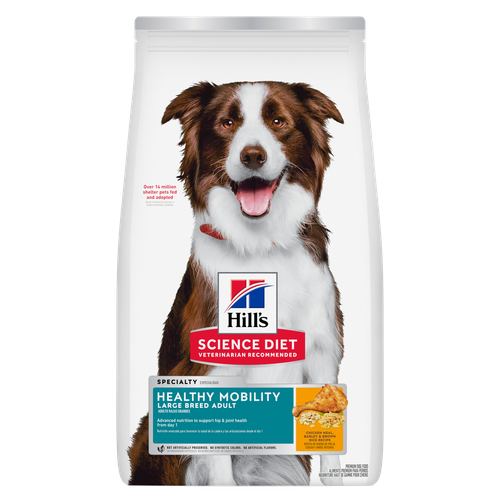
Hill's Science Diet Adult Healthy Mobility Large Breed Chicken Meal, Barley & Brown Rice Recipe Dog Food
Advanced nutrition shown to support joint health and improve mobility

Adult Light Large Breed Chicken Meal & Barley Recipe Dog Food
Fewer calories for less active large breed dogs
Related articles
Keeping Your Dog From Begging at the Dinner Table
Learn how to stop your dog from begging at the dinner table, and understand how it can help contribute to his health.
What to Look For in Food for a Mature Dog
Learn about choosing the right dog food to help ensure your mature older dog will receive the correct balance of nutrition.
Helpful Tips for Exercising with Your Dog
Though it may seem like your four-legged friend loves nothing more than to nap on the couch, dogs need regular exercise to stay healthy just like people do.
Exercise Tips to Keep Your Dog Active
A little exercise can make a big difference. Not only will it enhance your pet’s health, but it will beef up your relationship as well.

Put your dog on a diet without them knowing
Our low calorie formula helps you control your dog's weight. It's packed with high-quality protein for building lean muscles, and made with purposeful ingredients for a flavorful, nutritious meal. Clinically proven antioxidants, Vitamin C+E, help promote a healthy immune system.
Put your dog on a diet without them knowing
Our low calorie formula helps you control your dog's weight. It's packed with high-quality protein for building lean muscles, and made with purposeful ingredients for a flavorful, nutritious meal. Clinically proven antioxidants, Vitamin C+E, help promote a healthy immune system.